The Laboratory uses scientific instruments that provide unequalled quality of results. These instruments are periodically checked and verified, guaranteeing the reliability and safety of results in accordance with ISO 17025 guidelines.
The laboratory’s technology, combined with its exceptional gem collection and library, makes it the French benchmark for gem analysis among professionals.
Research efforts are important in maintaining the LFG’s high level of expertise. They also make it possible to communicate on topical subjects to the gemmological community in order to keep it informed about new gem deposits, treatments and synthesis.

The basic instruments used in the laboratory are the polariscope, refractometer, dichroscope, Chelsea filter, UV lamp, hydrostatic balance, Geiger counter, 405 nm laser, magnets, etc.
Analytical instruments used at the LFG
Photography: acquisition of photos of gems
- Alphashot Micro from OrbitVU
- GemLightBox Pro
- Canon EOS 6D Mark II and Nikon D7000 cameras
Microscopy: observation of gems and their inclusions, providing important data on the nature, treatment and origin of gems.
- Zeiss Stemi 305 and 508 binocular microscopes
- Nikon SMZ25 stereomicroscope with high-definition camera
- Sortoscope for analysing the purity and cut quality of mixed diamonds
Metrology: acquisition of the mass and measurements of gems
- Mettler-Toledo JP 105 DUG precision balance, periodically checked and verified with COFRAC calibration certificates
- Leveridge calipers
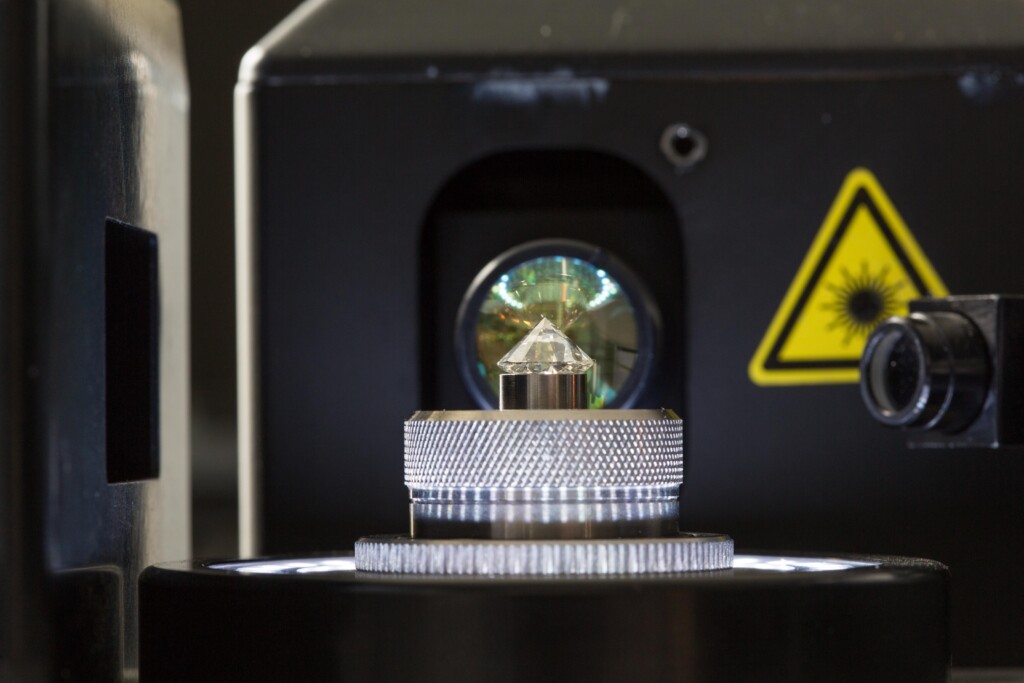
- Sarine Diamension HD digital measurer: measurement of dimensions and proportions of faceted stones, high-resolution 3D scan.
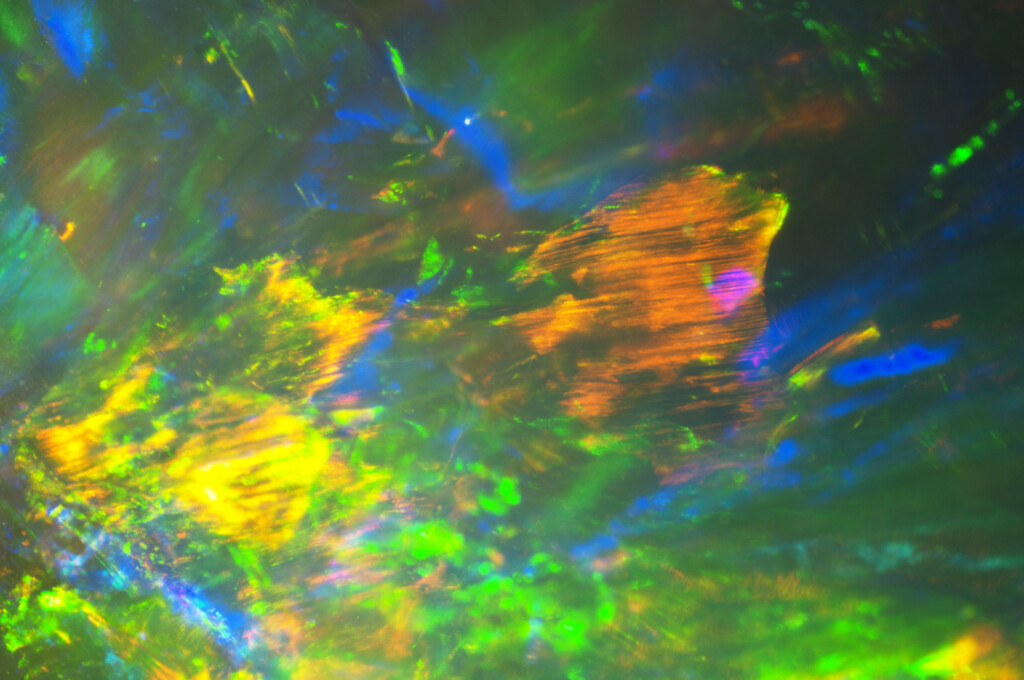
Colour: characterisation of gem colour
- MacBeth Judge II light booth with standardised lighting (D65 daylight at 6500K and A incandescent light at 2850K).
- Sets of masterstones and colorimetric abacuses for grading the colour of diamonds and characterising the colour of gems.
Fourier transform infrared spectrometry (FTIR): mineralogical identification, search for treatments…
- Thermo Scientific IS50 FTIR spectrometer
- Bruker Tensor 27 FTIR spectrometer, Hyperion microscope, HTS-XT autosampler
- Bruker Alpha portable FTIR spectrometer
Ultraviolet-Visible-Near Infrared (UV-Vis-PIR) absorption spectrometry: analysis of the origin of colour, research of treatments and help in determining the geographical origin of gems.
- Jasco V670 UV-Vis-PIR spectrometer with integrating sphere
- IDIL portable fibre-optic UV-Vis-PIR spectrometer
- Gemmosphere MagiLABS portable UV-Vis-PIR spectrometer
Photoluminescence spectrometry: gem identification and treatment analysis
- Renishaw InVia Raman spectrometer
- EXA portable spectrometer from MagiLABS
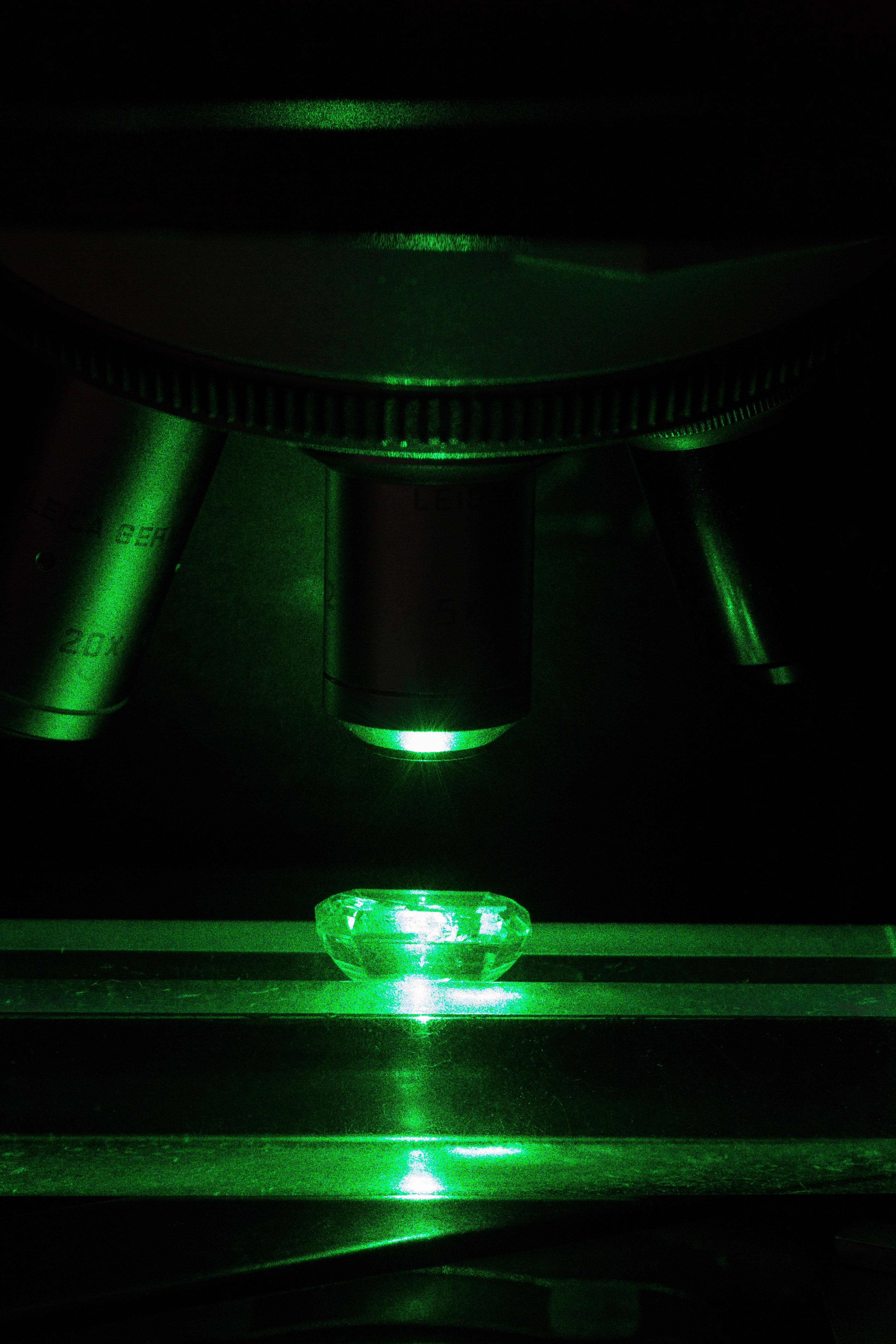
Raman scattering spectrometry: acquisition of Raman scattering spectra, mineralogical identification of the gem and its inclusions, treatment research
- Renishaw InVia Raman spectrometer
- GemmoRaman portable Raman spectrometer from MagiLABS
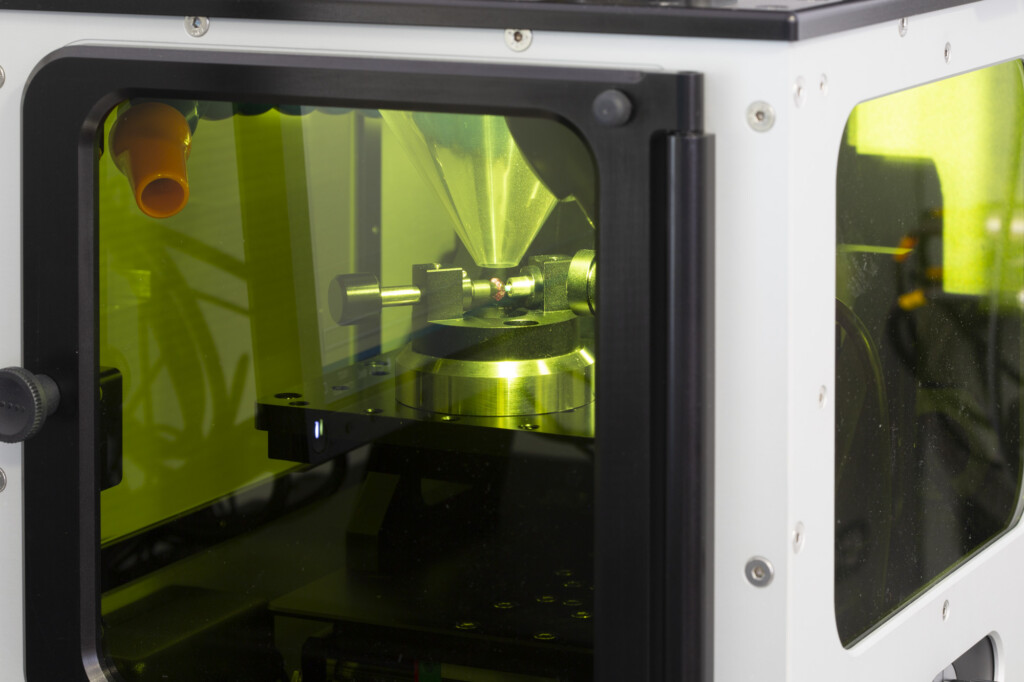
Chemical analysis: chemical composition, trace element research for mineralogical identification, research of treatment and help in determining geographical origin.
- Thermo ARL Quant’X EDXRF (Energy Dispersive X-Ray Fluorescence) spectrometer
- Applied Photonics LIBS (Laser Induced Breakdown Spectroscopy) spectrometer for the detection of beryllium Be in corundum.
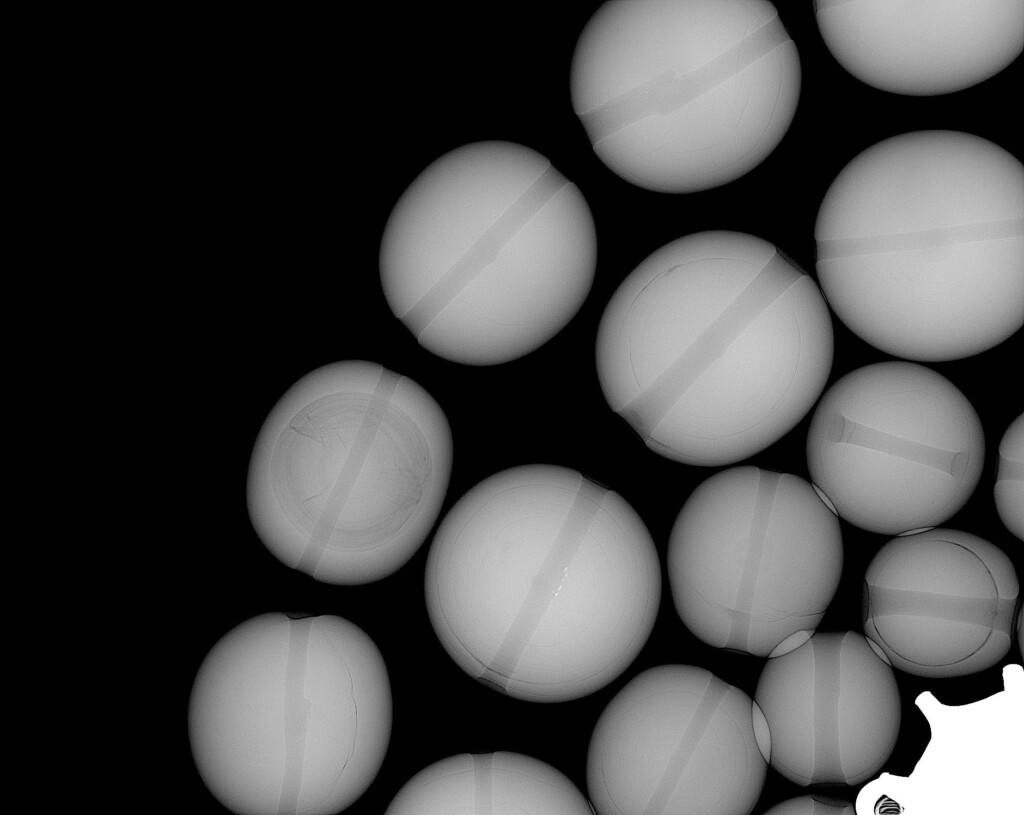
Radiography: X-ray imaging and observation of luminescence for the analysis of pearls and gem fillings
- Microradiography / X-ray Tomography DeskTom 130 Solutions
Luminescence imaging: observation of luminescence and gem growth morphology (natural diamond / synthetic diamond separation)
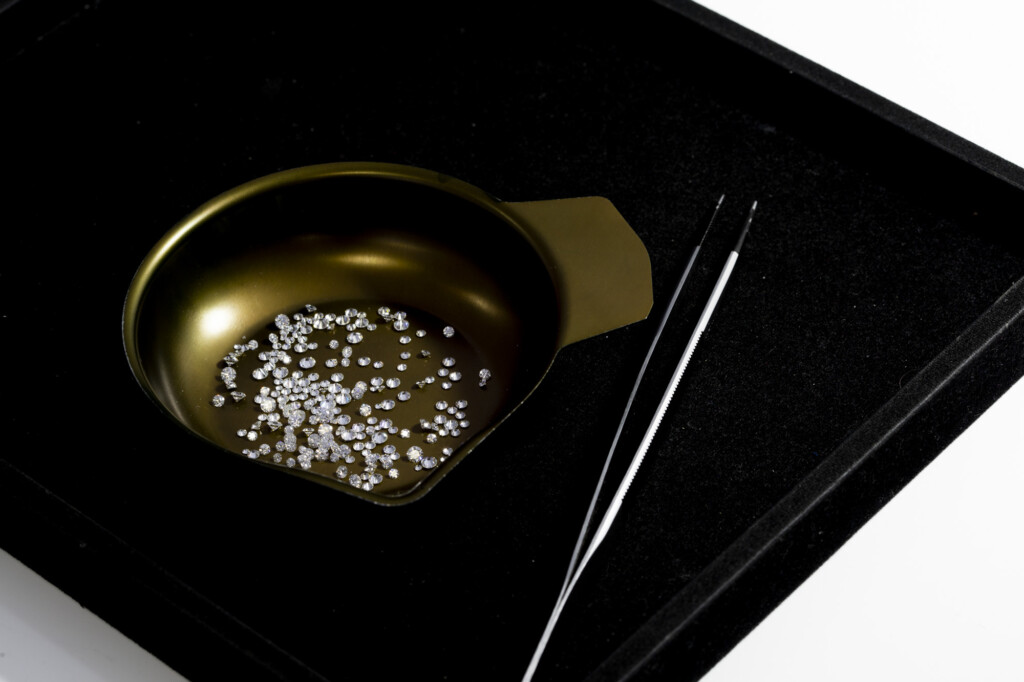
Automatic sorting: for natural/synthetic separation of mixed diamonds
Bibliographic resources: the LFG has an extensive library, which has been in place since its creation and is regularly updated through the acquisition of new works, enabling it to maintain its level of expertise. The LFG team actively participates in numerous international congresses, providing an opportunity to communicate on the research work carried out at the LFG and also to enhance its knowledge through international exchanges.
Gemmological reference collection: the LFG has a large collection of gems used as reference material for the laboratory and also as study samples for the training and research departments. This reference collection has been built up since the LFG was founded and is regularly enhanced through purchases, donations and collections from deposits.